
Ohio dogs • Care and payment

Pet insurance for your dog in Ohio

Connect the Ohio policy you buy with the payments, records and decisions involved when your dog needs more than a routine visit.

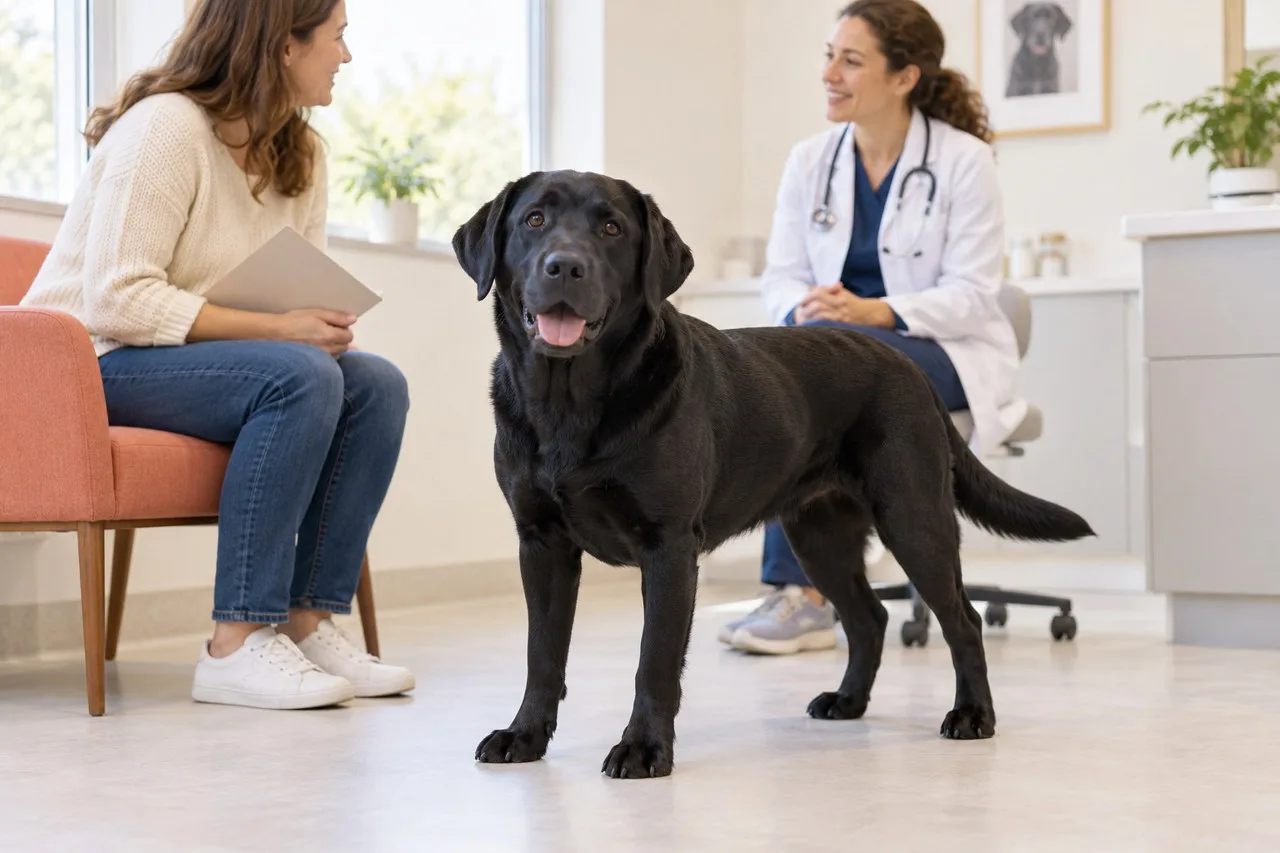
Black dog standing beside an owner and veterinarian in a clinic
✓ Policy-first ✓ Independent ✓ Useful checks
Direct answer
Compare the actual dog-specific policy and its exclusions, then plan for the clinic payment before reimbursement. An Ohio provider’s published hospital deposit is not the same as your insurance deductible, and a state availability listing is not approval for a particular dog or condition.
Policy mechanics

A hospital deposit can be much larger than a deductible

The Ohio State University Veterinary Medical Center publishes an inpatient minimum deposit of 75% of the high end of its estimate range, with the possibility of a higher required amount. Its outpatient services generally require payment at the time of service, and the inpatient balance is due at discharge. Those are that institution’s financial rules, not a statewide veterinary schedule.

If your dog is referred there or to another hospital, confirm that hospital’s current terms before relying on insurance to handle admission. The deductible measures a part of your insurance cost-sharing; the deposit is money the provider requires before it has an insurance claim outcome. They answer different questions.

Tell the clinical team about budget limits before diagnostic and treatment decisions where possible. For urgent concerns, contact a veterinarian promptly rather than waiting to finish a policy comparison.

Quotes

What changes when the hospital revises an estimate?

Illustrative stage Calculation Planning consequence
Initial inpatient estimate: $2,000–$3,000 75% of $3,000 = $2,250 minimum under the published baseline. A $500 insurance deductible would not make the initial deposit $500.
Revised estimate: $3,000–$4,000 75% of $4,000 = $3,000 at the same baseline. Relative to the initial $2,250 deposit, another $750 would reach that amount.
Final invoice and insurance review Use actual charges, eligibility and policy calculation. Deposit payments are credited by the clinic; they are not extra medical charges.

The dollar estimates are invented to show the arithmetic, not a quote from Ohio State or an expected dog-treatment cost. The hospital determines the actual deposit and may require more. Ask how it will communicate revisions and what consent is needed before additional work.

For the eventual claim, keep the final invoice and payment record. Do not add the deposit to the invoice total a second time when estimating the overall expense. Ask the insurer which services qualify and what it still needs to determine payment.

Cost & value

Choose the dog benefits before adjusting the premium

List any dog-specific concern you intend the policy to address, such as a future orthopedic illness, an unexpected injury or continuing care after a new covered diagnosis. Find its inclusion and relevant exclusions in the actual offer. A familiar breed name on an advertisement is not evidence that every associated condition is included.

Ask separately about examination fees, diagnostic tests, prescribed medication and any rehabilitation the veterinarian may recommend. Benefits can be optional or limited, so compare the configured policy rather than the company name alone. Keep routine vaccinations and other planned preventive services in a separate column.

Use the dog’s correct age, breed description and actual Ohio residence for quotes. Save the policy version and selected options. This guide has not collected an individual premium or established a typical Ohio dog bill.

What to know

Make the primary practice and referral file agree

Before a planned referral, ask which records the receiving hospital needs and how those will reach it. Keep the referral reason, relevant tests and medication information with the dog’s provider list. Insurance review may need earlier history as well as the specialist’s final invoice.

When additional diagnostics change the proposed care, ask the clinic to identify the new services in the estimate. Then ask the insurer about those services under the relevant benefit. Do not assume an earlier general response approves every later change.

At discharge, separate clinical instructions from claim paperwork. Follow the veterinarian’s care instructions; retain the itemized charges and any records the insurer requests. A later posted charge may require a supplementary invoice, so reconcile the provider’s final balance rather than treating the first receipt as necessarily complete.

What to know

Use Ohio’s company search for the underwriting identity

The Ohio Department of Insurance provides an authorized-company search. Use the legal insurer named in the quote or declarations, not just a brand or agency label. Keep that result with your documents and clarify any mismatch before buying.

A licensing result is not a recommendation, a coverage decision or proof that every product is offered to your dog.

Finish with two answers you can use: the risks the offered policy is intended to cover, and the money you can make available if the dog needs care before reimbursement. If either remains unresolved, keep investigating that specific gap.

Evidence

Sources and policy context

These public references support the consumer or veterinary context. Named insurer details were checked in official product materials; the policy offered for your pet and state determines the actual terms.

Next step

Compare Current Pet Insurance Rates

Check current options for your pet and location, then compare the policy details, exclusions, costs, and eligibility before choosing.

Compare the policy before you choose Check the actual offer, exclusions and out-of-pocket terms.
See Rate Options